
For decades, the soundtrack of Ho Chi Minh City (HCMC) has been the roar of millions of motorbikes flowing like a river through its sun-drenched streets. It’s a beautiful, chaotic dance that every local and traveler knows by heart. But as of late 2024, a new, quieter rhythm has been introduced to the city’s pulse. The long-awaited Ho Chi Minh City Metro Line 1 is finally operational, transforming how residents and visitors navigate this booming metropolis.
If you are tired of sitting in gridlocked traffic under the sweltering tropical sun, or if you simply want to experience Saigon from a modern, air-conditioned vantage point, you are in the right place. Welcome to your ultimate guide on ishabil.com for mastering the HCMC Metro.
In this comprehensive guide, we will walk you through everything you need to know about the operational Metro Line 1 (Bến Thành – Suối Tiên). We will cover the stations, the exact fares, how to buy your tickets step-by-step, and how to connect to other forms of transport. Let's dive into the future of travel in Vietnam's southern capital!

🔗 Quick navigation
The essentials: HCMC Metro Line 1 at a glance
Before we take a deeper dive into the route, let’s look at the hard numbers. Metro Line 1 is a game-changer for the city's infrastructure, connecting the bustling central business district in District 1 to the sprawling eastern suburbs of the newly established Thủ Đức City.
- Route: Bến Thành (District 1) to Suối Tiên Terminal (Thủ Đức City)
- Total length: 19.7 kilometers (12.2 miles)
- Total travel time: Approximately 29 minutes from end to end.
- Operating hours: 5:00 AM to 11:30 PM daily.
- Train frequency: Every 5 to 15 minutes, depending on peak hours.
- Top speed: Up to 110 km/h on elevated sections.

💡 Ishabil fact
Did you know? The HCMC Metro Line 1 took nearly two decades from its initial proposal in 2007 to its grand opening on December 22, 2024. The project was heavily backed by Japanese Official Development Assistance (ODA), which is why you will notice the incredibly sleek, quiet, and efficient Hitachi-built trains that feel exactly like the ones gliding through Tokyo!
Exploring the route: The 14 operational stations
Currently, Line 1 is the only operational metro line in the city. While you might see complex maps at the stations showing future lines (like Line 2, which begins construction in 2026), don't let them confuse you. Right now, you only need to worry about one single, straight path featuring 14 stations—3 underground and 11 elevated.
Here is your complete station-by-station breakdown:
The underground city center (District 1)
1. Bến Thành Station (underground hub)
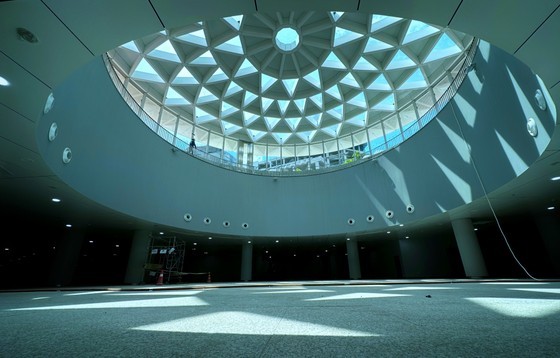
This is the crown jewel of the network. Located right across from the iconic Bến Thành Market, this station is an engineering marvel. It features a massive central skylight that bathes the subterranean concourse in natural tropical sunlight. In the future, this will be the central interchange for multiple metro lines.
2. Opera House Station (underground)
Step off the train here and you are instantly in the most upscale part of Saigon. This station drops you right at the steps of the historic Municipal Theatre (Opera House) and the Nguyễn Huệ Walking Street. Perfect for tourists and weekend strollers.
3. Ba Son Station (underground)
Situated at the historic Ba Son shipyard area near the Saigon River, this station connects you to high-end residential complexes and offers a quick escape out of the immediate downtown core.
The elevated journey (Bình Thạnh & Thủ Đức City)
As the train emerges from the dark tunnels after Ba Son, it glides onto the elevated viaducts, offering fantastic views of the city skyline and the Saigon River.
- 4. Văn Thánh Park Station: Your gateway to lush green spaces and the bustling Bình Thạnh District.
- 5. Tân Cảng Station: Located near the towering Landmark 81—Vietnam’s tallest building. A must-visit for shopping and panoramic city views.
- 6. Thảo Điền Station: Welcome to the expat enclave! This station serves an area famous for its international schools, trendy cafes, boutique shops, and global culinary scene.
- 7. An Phú Station: A rapidly growing residential and commercial hub in Thủ Đức City.
- 8. Rạch Chiếc Station: Positioned near the city’s major sports complexes.
- 9. Phước Long Station: Serving the dense suburban neighborhoods along the Hanoi Highway.
- 10. Bình Thái Station: A vital stop for local commuters heading to industrial and residential zones.
- 11. Thủ Đức Station: The heart of the former Thủ Đức district, bustling with local markets and street food.
- 12. High-Tech Park Station: The economic engine of the east, home to massive international tech campuses and corporate offices.
- 13. National University Station: Buzzing with energy, this stop serves the massive student population of the Vietnam National University campus.
- 14. Suối Tiên Terminal (New Eastern Bus Station): The end of the line! This station is crucial for two reasons: it drops you right at the famous Suối Tiên Cultural Amusement Park, and it connects directly to the New Eastern Bus Station (Bến xe Miền Đông Mới), your gateway to catching long-distance buses to central and northern Vietnam.
⭐ Ishabil tips
Maximize your view: If you are riding for sightseeing, try to grab a window seat on the right side of the train when heading from Bến Thành towards Suối Tiên. The transition from the underground tunnel to the elevated track over the Saigon River offers a spectacular, sweeping view of the city skyline!
Fares and ticketing: A simple guide
The management of the HCMC Metro has designed the fare system to be incredibly affordable, encouraging locals to leave their motorbikes at home.
- Cash fares: Ranging from 7,000 VND to 20,000 VND (roughly $0.30 to $0.80 USD) depending on how many stations you travel.
- Non-cash fares: If you use a metro smart card or digital payment, you get a slight discount, with fares ranging from 6,000 VND to 19,000 VND.
How to buy a ticket (step-by-step)
Purchasing a ticket is a breeze, thanks to the bilingual automated machines located at every station.
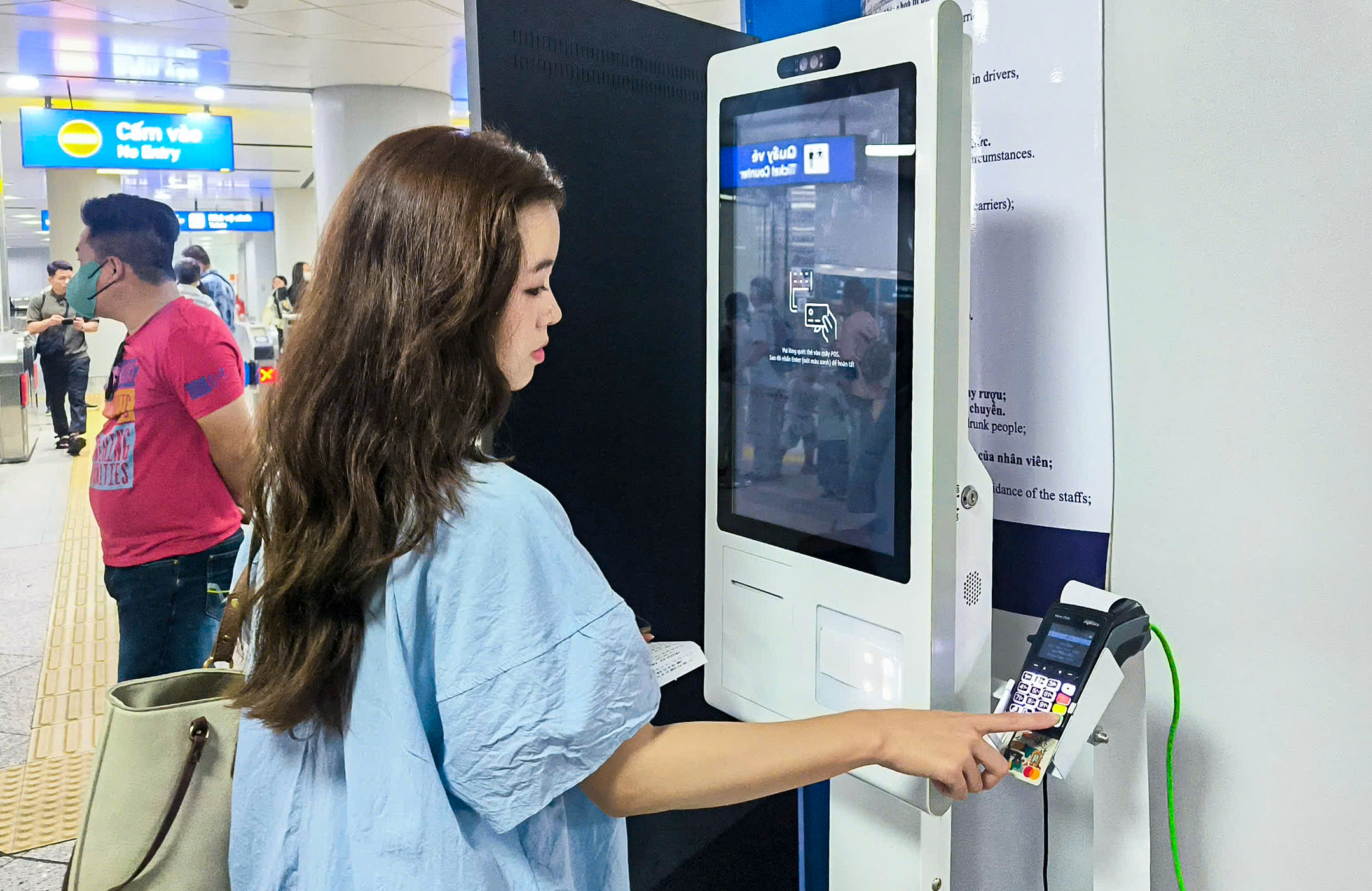
- Select your language: Approach the bright touchscreen ticket machine. Tap the flag icon in the top corner to switch the interface to English if necessary.
- Choose your destination: A digital map of Line 1 will appear. Simply tap on the station you wish to travel to. The screen will automatically calculate your fare based on your current location.
- Select ticket type and quantity: Choose whether you want a single-journey token or if you are topping up a reusable smart card. You can also adjust the number of tickets if you are traveling with a group.
- Make your payment (cash or card): Insert your cash (VND bank notes are accepted and change is provided) into the bill slot. Alternatively, use the attached POS terminal to tap your credit card or scan a local e-wallet QR code.
- Collect your token: The machine will dispense a round, plastic RFID token (and your change, if applicable).
- Tap to enter, insert to exit: Proceed to the turnstiles. Tap the token on the sensor to enter the station platform. Keep the token safe during your ride! When you reach your destination, you must insert the token into the slot at the exit turnstile so it can be recycled.
Top city attractions & how to reach them by metro
The beauty of Metro Line 1 is that it acts as a direct artery to some of Ho Chi Minh City's most iconic cultural landmarks and modern marvels. Here is your cheat sheet to the best hop-on, hop-off destinations:
-
 The iconic clock tower of Ben Thanh Market.
🛍️ Bến Thành Market
🚇 Metro station: Bến Thành Station (Underground)
How to get there: Step out of the station and you are basically there! It is just a 50-meter walk to the iconic clock tower. Perfect for grabbing some street food, shopping for souvenirs, or enjoying an authentic Vietnamese iced coffee.
-
 The stunning façade of the Saigon Opera House.
🎭 Saigon Opera House & Nguyễn Huệ Walking Street
🚇 Metro station: Opera House Station (Underground)
How to get there: The station drops you right at the steps of the stunning 1898 French colonial Opera House. From there, it's a 1-minute walk to the vibrant Nguyễn Huệ pedestrian street, lined with chic cafes, historic architecture, and weekend performers.
-
 The beautifully preserved interior of the historic Central Post Office.
⛪ Notre-Dame Cathedral & Central Post Office
🚇 Metro station: Opera House Station (Underground)
How to get there: Enjoy a scenic, tree-lined 500-meter walk from the Opera House up Đồng Khởi street to reach these two 19th-century architectural masterpieces. Don't forget to send a postcard home from the fully functioning historic post office!
-
 Landmark 81, Vietnam's tallest skyscraper, towers over the city.
🌆 Landmark 81 (Vietnam's tallest building)
🚇 Metro station: Tân Cảng Station (Elevated)
How to get there: Exit Tân Cảng station and you will immediately see the towering 461-meter skyscraper. It’s a short walk to reach the massive shopping mall, riverside park, and the incredible SkyView observation deck (pro tip: sunset is the best time to go!).
-
 The vibrant and cultural Suối Tiên Theme Park.
🎢 Suối Tiên Theme Park
🚇 Metro station: Suối Tiên Terminal (Elevated)
How to get there: Ride the train all the way to the end of the line! The terminal acts as the direct gateway to this massive, cultural amusement park. What used to be a long, traffic-heavy bus ride is now a quick 30-minute air-conditioned glide from the city center.


🔗 Ishabil Connect
Mastering your first & last mile:
The metro gets you across the city fast, but how do you get to your final doorstep? HCMC has integrated several connection methods to make your journey seamless:
- Ride-hailing: Stations like Bến Thành, Thảo Điền, and Tân Cảng have designated pick-up points for ride-hailing apps like Grab, Be, and Gojek. You can book a motorbike taxi (xe ôm) the moment you step off the train.
- Bus network synchronization: The city’s green and blue public buses have been re-routed to feed directly into metro stations. For example, Suối Tiên Terminal connects you directly to the regional bus network.
- Future LRT & metro lines: While Line 1 is the only operational train right now, Bến Thành is designed to link seamlessly with the upcoming Metro Line 2 (connecting to the airport and western suburbs) and future Light Rail Transit (LRT) systems planned for the Thủ Thiêm area.
The future is bright: What is next for the HCMC Metro?
If you think Line 1 is impressive, wait until you see what Ho Chi Minh City has planned next. Line 1 is just the beginning of a massive master plan to completely transform how millions of people move around this bustling metropolis. The goal? To build a massive network of interconnected train lines that will eventually replace the sea of motorbikes.
Here is a simple look at what the future holds for the city's transport network:
🚇 Metro Line 2 (Bến Thành – Tham Lương)
This is the next big milestone! After years of planning, heavy construction on Metro Line 2 officially began in early 2026. While Line 1 connects the city center to the East, Line 2 will serve as the main artery pointing Northwest. It will run right under some of the city's busiest streets (like Cách Mạng Tháng Tám), connecting Bến Thành market directly to the densely populated areas of District 12 and beyond.
- Status: Currently under construction. Huge underground boring machines are digging the tunnels right now!
- Expected opening: Scheduled to be completed around 2030.
- Cool tech: Line 2 will use fully automated European technology, meaning the trains will be entirely driverless!
🌆 Expanding beyond the city limits
Ho Chi Minh City doesn't just want to connect its own districts; it wants to connect the whole southern region. By 2030, the government aims to complete over 200 kilometers of urban railway. This includes:
- Connecting to neighboring provinces: Future extensions are planned to link the HCMC Metro directly to the neighboring industrial hubs of Bình Dương and Đồng Nai.
- Airport connections: Plans are already in motion to build a light rail system connecting the new Thủ Thiêm financial district straight to the massive Long Thành International Airport currently under construction.
💡 Ishabil fact
The Bến Thành underground city: Right now, Bến Thành is just the starting point for Line 1. But by 2030, it is designed to be a massive multi-level underground hub—think of it like the "Grand Central Station" of Southeast Asia—where Line 1, Line 2, and several other future lines will all cross paths underneath the historic market!
Conclusion: Embrace the change
The Ho Chi Minh City Metro Line 1 is more than just a transportation project; it is a symbol of a rapidly modernizing Vietnam. It brings a new level of convenience, safety, and environmental sustainability to a city that is constantly on the move. Whether you are a daily commuter heading to the High-Tech Park, an expat grabbing coffee in Thảo Điền, or a tourist exploring the Opera House, the metro offers a cool, calm, and incredibly cheap alternative to the chaotic streets below.
So, grab your token, step into the cool air-conditioned carriage, and watch the vibrant tapestry of Saigon zip by from a brand new perspective. Safe travels, and keep exploring with ishabil.com!
🚇 Explore the Global City Metro Directory
Navigating urban transit? Check out my complete global hub featuring comprehensive station lists, budget traveler tips, and personal commuter guides for metro networks across the Middle East, India, and Southeast Asia.
🚇 View City Metro Directory