
Welcome to a brand-new era of urban transit in Bihar! If you have ever been stuck in the notorious traffic snarls on Bailey Road or the bypass, you know how exhausting navigating the city can be. But the landscape of Patna is changing rapidly. With the latest expansion of the Patna Metro on July 2, 2026, the city's public transport has officially entered the fast lane.
This isn't just about tracks and trains; it is about reclaiming your time, enjoying air-conditioned comfort, and experiencing a world-class commute. At ishabil.com, we are thrilled to bring you this definitive, storytelling-style travelogue and practical guide to navigating the currently operational stretches of the Patna Metro. Whether you are a daily office-goer, a student, or a visitor arriving from another district, this guide has everything you need to know before you step onto the platform.

🔗 Quick Navigation
- 1. 🚇 The Active Network: Where Can You Go Today?
- 2. 🗺️ Station Spotlights: What’s Near Your Stop?
- 3. ⏱️ Timings, Speeds, and Fares
- 4. 🎟️ Step-by-Step Ticket Purchase & Payment Options
- 5. 🧳 Good to Know Before You Go: Security & Accessibility
- 6. 🚀 Looking Ahead: Patna Metro Future Expansion & Phase 2 Plans
🌟 Ishabil Fact
Did you know that the Patna Metro is designed to celebrate Bihar's rich heritage? The sleek, modern 3-coach train sets have a capacity of 945 passengers, but what truly catches the eye are the interior panels adorned with beautiful, traditional Madhubani art elements. It’s a perfect blend of high-speed modern technology and deep cultural roots!
🚇 The Active Network: Where Can You Go Today?
Let’s cut through the noise of future blueprints and focus on what you can actually ride right now. Currently, operations are running exclusively on the elevated Priority Corridor of the Blue Line (Corridor 2).
As of the recent inauguration by Chief Minister Samrat Choudhary, the active network stretches across approximately 6.5 kilometers. It acts as a vital lifeline connecting the eastern transport gateways of the city directly into the densely populated residential and commercial heartlands.
The Active Station Sequence (East to West):
- [New ISBT] ── Patliputra Bus Terminal (Eastern Terminus)
- [Zero Mile] ── Highway Bypass Hub
- [Bhoothnath] ── Heritage and Residential Gateway
- [Malahi Pakri] ── The Kankarbagh Commercial Lifeline (Current Endpoint)
Note on Khemnichak: While tracks are laid up to Khemnichak, the station itself is in the final stages of completion to serve as a massive structural interchange for the future Red Line. For now, your comfortable journey begins at New ISBT and terminates at Malahi Pakri.
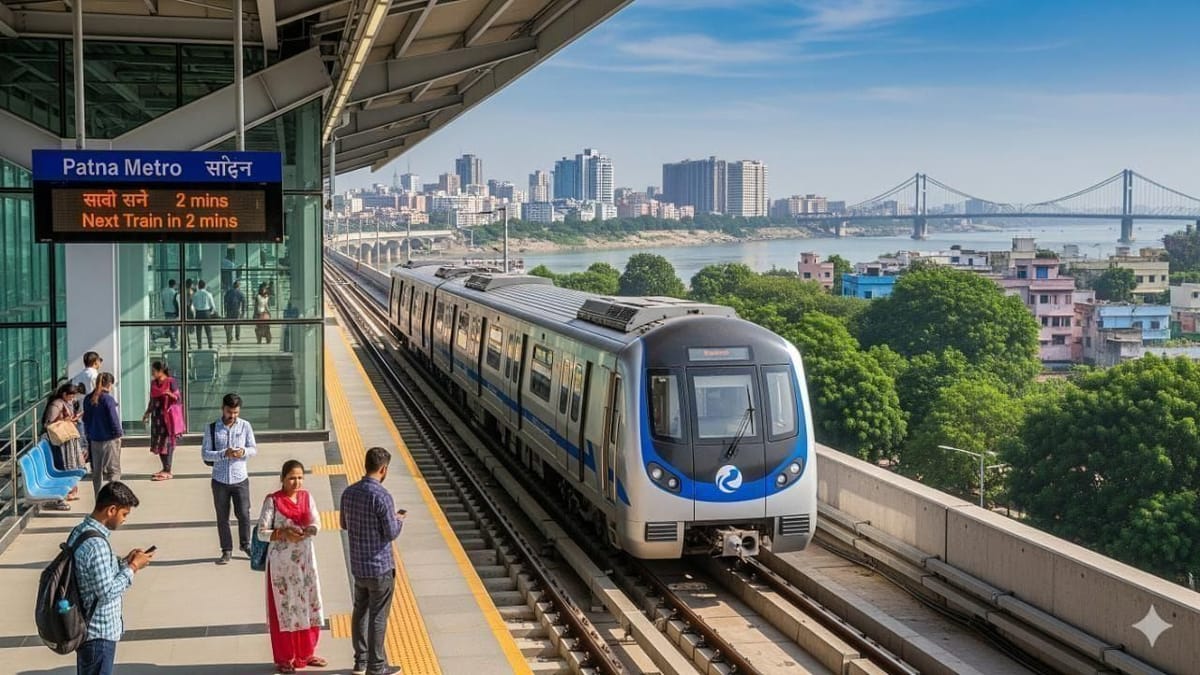
Modern amenities and clean platforms at the newly opened Patna Metro stations.
🗺️ Station Spotlights: What’s Near Your Stop?
The true magic of a metro system is how it transforms neighborhoods. Here is a breakdown of what you will find when you step off the train at each active station.
1. New ISBT Station (Patliputra Bus Terminal)
This is the massive main entry point into Patna for travelers arriving from other districts or states. If you are coming in via a long-distance bus, you can literally roll your luggage from the bus terminal straight into the metro station. The nearby Transport Nagar serves as the city’s primary commercial logistics and warehousing district.
2. Zero Mile Station
Situated right where the main highway bypass slices into the city, Zero Mile is a historic geographical marker. It handles the heavy arterial traffic crossing over the New Bypass Road (NH-30). Around this station, you will find large automobile showrooms, transit hotels, and regional transport offices.
3. Bhoothnath Station
A brilliant stop for history buffs and foodies alike. Bhoothnath serves as a gateway to the Kumhrar Archaeological Site, where you can witness the excavated ancient wooden pillared halls of the Mauryan Empire. Just below the station, the bustling Bhoothnath Road Market is alive with local street-food stalls, fresh produce vendors, and the neighborhood Amarnath Mandir.
4. Malahi Pakri Station (The Newest Hub)
The latest jewel in the Blue Line, Malahi Pakri opens direct access to Kankarbagh—one of Asia's largest organized residential colonies. Stepping out here means instant access to the Malahi Pakri Chowk commercial hub, packed with multi-story shopping centers, clothing boutiques, popular sweet shops, and family restaurants. Nearby manicured parks like Shivaji Park and Deshbandhu Park are just a short walk away, making it a perfect evening hangout destination.

💡 Ishabil Tips
- Park & Ride: Full-fledged parking is still under construction at smaller stops, but New ISBT Station has dedicated two-wheeler and four-wheeler parking slots for a nominal fee. Park there and ride stress-free!
- Beat the Heat: All trains and underground/elevated concourses are fully air-conditioned. It's the best way to escape the brutal Patna summer sun.
- Avoid the Queue: Buy the newly launched Patna Metro Prepaid Smart Card if you plan to travel more than twice a week. You can bypass the ticket counters entirely.
⏱️ Timings, Speeds, and Fares
The Patna Metro has been designed to cater to the working class, students, and tourists alike, keeping affordability and punctuality at its core.
- Daily Operating Hours: Trains run from 7:55 AM to 7:55 PM every day.
- Train Frequency: You can expect a fresh train pulling into the platform roughly every 20 minutes.
- Cruising Speed: Trains currently operate at a smooth, introductory speed of around 40 km/h, giving you a quiet, bump-free ride above the city traffic.
Budget-Friendly Fares
There is absolutely no surge pricing here. The fare structure is transparent and highly affordable:
- Minimum Fare: ₹15 (for hopping 1 to 2 stations).
- Maximum Fare: ₹30 (for traveling the entire active end-to-end stretch from New ISBT to Malahi Pakri).
🎟️ Step-by-Step Ticket Purchase & Payment Options
Getting on the metro is incredibly simple, with multiple digital and physical avenues to secure your entry. Here is your step-by-step guide to buying a ticket:
- The Traditional Token: Walk up to the Customer Care or Ticket Counter at the concourse level. Pay via cash or UPI to receive a physical RFID token. Tap it at the entry gate, and drop it into the slot at your destination's exit gate.
- Smartphone QR Code (The Fastest Way): Download the official transit app. Select your starting station and destination. Pay using UPI, Debit/Credit Card, or Net Banking. The app generates a digital QR code. Simply scan your phone screen at the Automatic Fare Collection (AFC) gates to enter and exit.
- NFC-Enabled Smart Card: Purchase a reusable Metro Smart Card for a one-time security deposit. You can recharge it online or at the station kiosks. Just tap and go! The AFC gate will automatically deduct the exact fare for the distance traveled.
🔗 Ishabil Connect: Mastering Multi-Modal Transport
A true transit network doesn't exist in isolation; it connects with how you already travel. Here is how the Patna Metro seamlessly integrates with other transport methods:
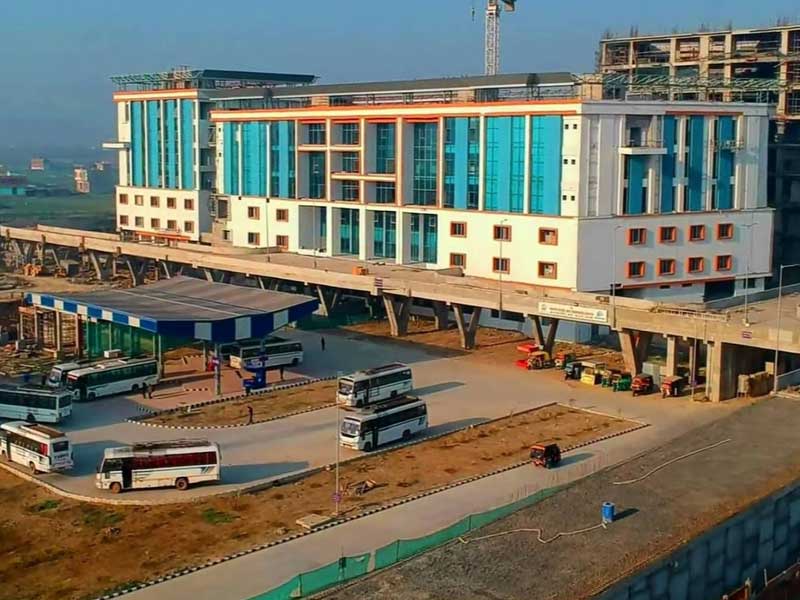
- The Ultimate Bus Integration: The absolute star attraction is the New ISBT terminal. It perfectly links regional, inter-state bus transit directly with the elevated metro platforms. If you are arriving from Gaya, Muzaffarpur, or beyond, you no longer need to hail an expensive cab. Walk out of the bus, take the escalator up to the metro, and zip into Kankarbagh for just ₹30.
- Last-Mile E-Rickshaws: Under every operational station (especially Bhoothnath and Malahi Pakri), dedicated zones for battery-operated e-rickshaws and autos have been set up. They act as light-rail transit (LRT) feeders, taking you deep into the residential colonies for just ₹10.
- Future LRT & Rail Ties: Once the underground section towards Patna Junction opens, the metro will seamlessly integrate with the Indian Railways network, creating a flawless hub-and-spoke model for the entire state.
🧳 Good to Know Before You Go: Security & Accessibility
To ensure a smooth journey for all readers of ishabil.com, keep these passenger rules and amenities in mind:
- Accessibility is a Priority: Every active station offers step-free access. You will find functioning escalators and dedicated elevators from the street level straight to the platforms. Tactile yellow pathways guide visually impaired passengers safely.
- Passenger Comfort: Every train features 12 dedicated, clearly marked seats reserved for women, senior citizens, and differently-abled passengers.
- Security and Baggage: Expect strict, airport-style security. Every bag must pass through an electronic X-Ray scanner. You are allowed one piece of luggage weighing up to 25 kg (think standard cabin baggage size). Bulky commercial goods are strictly forbidden.
- Stay Connected: Because the current operational stretch is entirely elevated, you will enjoy uninterrupted, high-speed 5G/4G cellular network coverage (Jio, Airtel, Vi) while cruising inside the train. No signal drops!
🚀 Looking Ahead: Patna Metro Future Expansion & Phase 2 Plans
While the active Blue Line stretch is already making waves, the Patna Metro Rail Corporation (PMRC) isn't stopping there. The master plan for the city’s transit network extends far beyond the current routes, aiming to create a comprehensive web of connectivity across the capital.
The Grand Vision: Corridors 3 and 4
With Phase 1 (Lines 1 and 2) well underway, planners have already begun laying the groundwork for future lines. The upcoming Phase 2 is designed to further integrate the city's sprawling suburbs and commercial hubs.
🔮 Proposed Line 3: The Bypass Lifeline
According to the latest project blueprints, the third metro line will act as a major southern artery.
- The Route: It is proposed to start from Mithapur Chowk and run all the way to Didarganj.
- Total Stations: The line is expected to feature 11 strategic stations.
- Key Neighborhoods Covered: Commuters can look forward to direct access through areas like Lohia Nagar, Kankarbagh, Income Tax Colony, Choti Pahari, Ranipur, and Guru Ka Bagh.
What This Means for Patna
This massive future expansion means that the Patna Metro will soon transition from a localized transit solution into a city-wide spine. The integration of these upcoming routes will drastically cut down dependence on road transport along the NH-30 Bypass and create new, high-value transit-oriented hubs across the city. Keep an eye on ishabil.com, as we will be tracking every new blueprint and route map as soon as they get the green light!
The Patna Metro is more than an infrastructure project; it is a lifestyle upgrade. By trading unpredictable road congestion for a cool, calm, and predictable metro ride, everyday commuters are reclaiming their peace of mind.
Ready to start your Bengaluru adventure? Grab your smartphone, head to the nearest metro station, and watch the true beauty of the Garden City unfold before you.
🚇 Explore the Global City Metro Directory
Navigating urban transit? Check out my complete global hub featuring comprehensive station lists, budget traveler tips, and personal commuter guides for metro networks across the Middle East, India, and Southeast Asia.
🚇 View City Metro Directory)